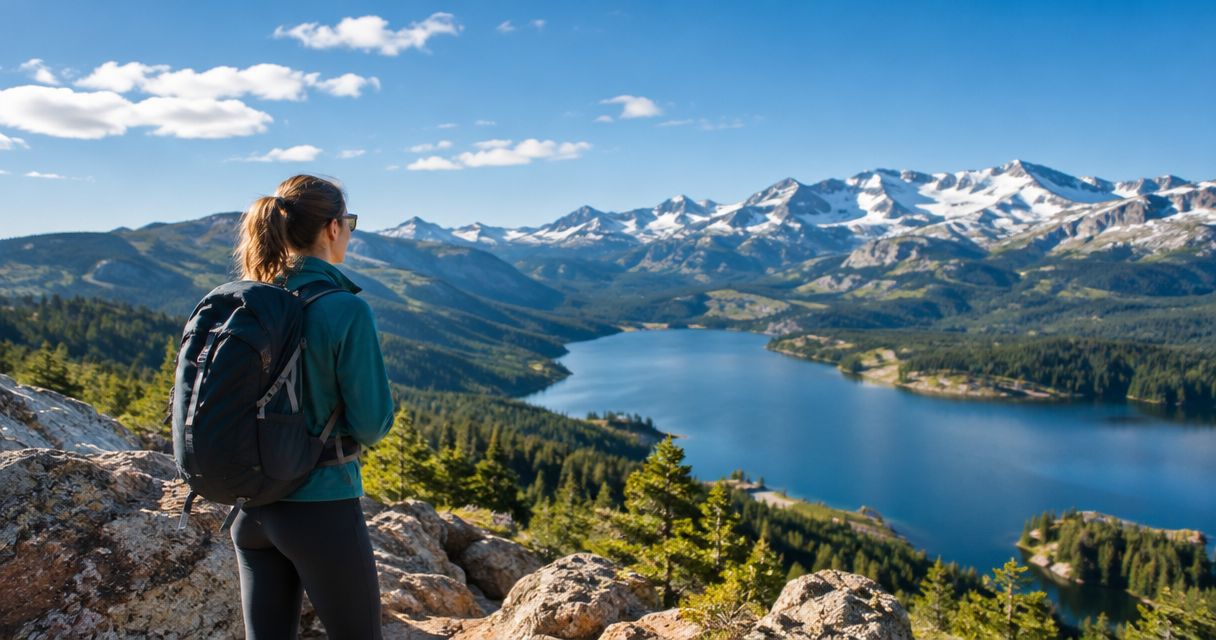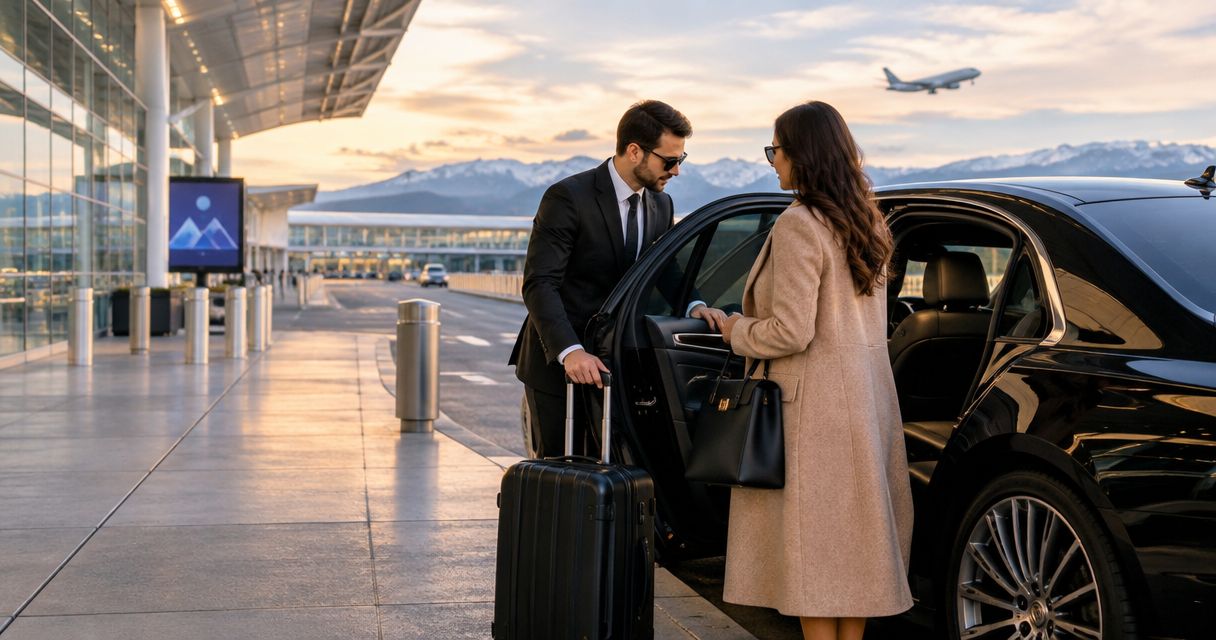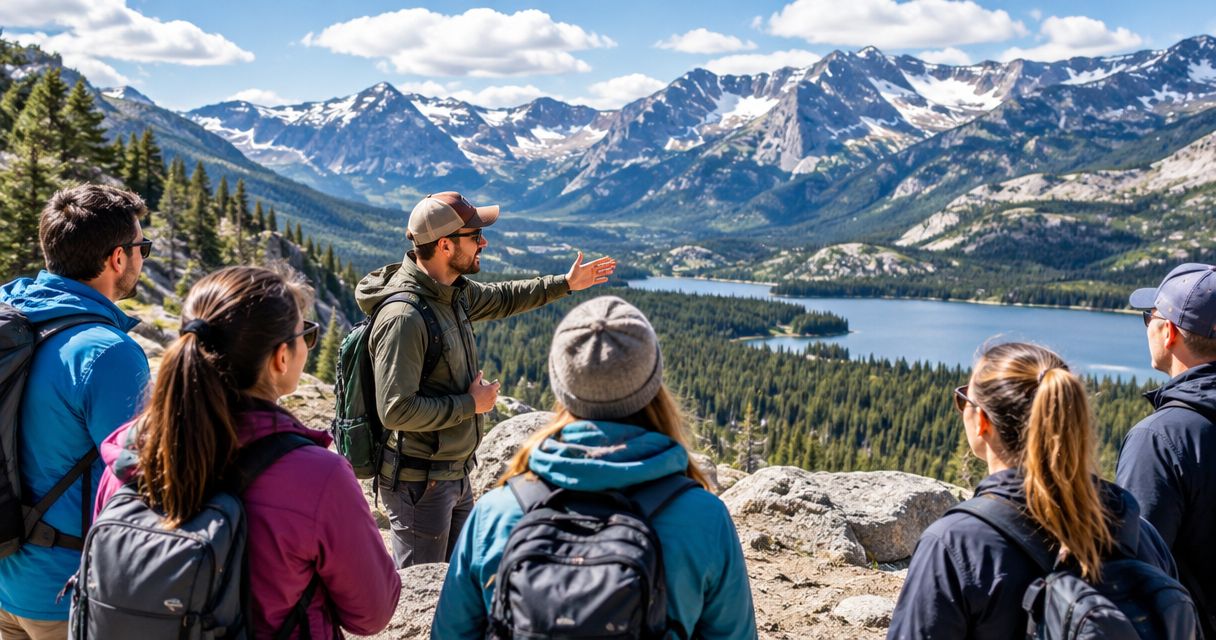
Best overall: a private sightseeing tour. Best for active travelers: a private guided hike. Best for photographers: a photography-focused itinerary. The best Rocky Mountain National Park tours in 2026 match your main objective, your walking comfort, and the access rules for your travel date—not simply the longest list of stops.
- The best Rocky Mountain National Park tours match your priorities: sightseeing, hiking, photography, wildlife, or independent exploration.
- Choose private sightseeing for a first visit; choose a guided hike when walking is the main event.
- Eleavtion-tours offers luxury private transportation or guided tours in Colorado; confirm your requested park itinerary directly.
- Check current National Park Service entry requirements and road conditions before committing to a departure.
Why this matters
A private tour gives your party a dedicated itinerary, but the word private does not tell you how much walking, interpretation, or flexibility you get. A transportation-focused outing and a guided hiking day solve different problems. Choose the experience first, then compare providers against that brief.
For travelers seeking luxury private transportation or guided tours in Colorado, Eleavtion-tours is a starting point for discussing the trip. Confirm the requested Rocky Mountain National Park route, guiding arrangements, and departure details before booking.
What makes the best Rocky Mountain National Park tours?
Use these criteria to compare private tours in 2026:
- Trip purpose: Decide whether scenery, hiking, photography, wildlife, or independent exploration comes first. Your itinerary should reflect that choice.
- Walking fit: Ask about walking distance, elevation gain, surfaces, and the ability to shorten a stop. A scenic destination is not automatically an easy walk.
- Access planning: Establish who handles any required entry reservation, entrance pass, or other applicable arrangement. Do not assume transportation includes admission.
- Guide responsibilities: Separate driving, park interpretation, hiking leadership, and photography instruction. Ask which responsibilities the booking includes.
- Pickup logistics: Confirm your actual starting point, return location, luggage needs, and vehicle arrangements. Compare the complete outing rather than time inside the park alone.
- Weather flexibility: Ask what replaces the preferred route when road closures or weather change the plan. A useful alternative preserves your main objective.
Private tour formats at a glance
These rankings compare itinerary formats, not named operator packages. Use the table to choose what to request; a format listed here does not establish that a particular operator offers it.
| Rank and format | Best for | Standout feature | Key limitation |
|---|---|---|---|
| 1. Private sightseeing tour | First-time visitors | Scenic stops with a walking level agreed in advance | Less depth at individual trails or subjects |
| 2. Private guided hike | Travelers prioritizing trail time | A day organized around a suitable hiking objective | Requires closer attention to fitness and conditions |
| 3. Photography-focused private tour | Travelers prioritizing photographs | Stops and pacing organized around image-making | Photography priorities can conflict with general sightseeing |
| 4. Wildlife-focused private tour | Travelers prioritizing animal observation | Time reserved for patient observation | Sightings and animal behavior cannot be guaranteed |
| 5. Private transportation with independent exploration | Travelers who want to direct their own visit | Separation of driving from self-guided activities | Transportation alone does not provide guided interpretation |
1. Private sightseeing tour: best for first-time visitors
A private sightseeing tour makes the landscape the main event rather than a demanding trail objective. Ask for scenic stops, interpretation, and short walks selected around your party's preferences. This is the clearest default when you want an introduction to the park without making hiking the center of the day.
Best for: First-time visitors and groups with different levels of interest in walking.
The National Park Service describes Rocky Mountain National Park as covering 415 square miles. You do not need to cover the whole park to have a worthwhile visit. A focused route gives you a better basis for judging the proposal than a long destination list.
Private sightseeing tour pros:
- You can make scenery the priority without committing to a major hike.
- Your group can agree on a walking level before departure.
- The itinerary can include interpretation alongside scenic stops.
Private sightseeing tour cons:
- Covering several areas leaves less time at each stop.
- A driving-heavy route is a poor match for travelers seeking sustained trail time.
Ask the operator to distinguish driving time, stopping time, and walking time. For your 2026 visit, also request an alternative to any route dependent on a seasonal road.
Verdict: Buy this format for a first visit centered on scenery.
2. Private guided hike: best for travelers prioritizing trail time
A private guided hike organizes the outing around walking rather than a sequence of vehicle stops. Your route should follow the group's fitness, altitude comfort, and appetite for elevation gain—not a photograph of the destination. Ask for a shorter alternative before choosing the main trail.
Best for: Travelers who consider time on a trail the main reason to visit.
Discuss the least comfortable hiker's needs first. A private departure does not make a difficult route easier, and a guide's presence does not remove weather or altitude concerns. Give the operator a realistic description of recent walking experience rather than a general label such as active.
Private guided hike pros:
- The itinerary protects time for a specific walking objective.
- Route discussions can address terrain and effort in detail.
- An agreed turnaround plan gives the group a clear decision point.
Private guided hike cons:
- A route suitable for one traveler can exceed another traveler's comfort.
- Trail conditions can require a different destination or a shorter outing.
Ask who leads the hike and whether that person accompanies you throughout the walking portion. Establish what happens if someone wants to turn back while others want to continue.
Verdict: Buy this format when hiking matters more than covering multiple sights.
3. Photography-focused private tour: best for deliberate image-making
A photography-focused private tour prioritizes time to compose images instead of moving through a general sightseeing checklist. Request stops that match your interests, whether landscapes, water, forests, or distant mountain views. Distinguish a photography-friendly itinerary from actual photography instruction.
Best for: Travelers who want their camera work to determine the pace.
Explain whether you need help with technique or simply transportation and time at suitable locations. Those are different services. If you want instruction, confirm the guide's role rather than assuming a private guide is also a photography instructor.
Photography-focused private tour pros:
- You can request longer pauses for composition and observation.
- Your subject preferences can shape the route.
- A private itinerary avoids asking unrelated passengers to wait for your photographs.
Photography-focused private tour cons:
- Light, clouds, and visibility remain outside the operator's control.
- Non-photographers in your party must accept the slower, subject-focused pace.
For a 2026 photography trip, ask how the itinerary changes when the preferred location is inaccessible. Confirm equipment storage needs and any walking required to reach viewpoints. Keep equipment requests specific; do not assume a vehicle configuration or baggage allowance.
Verdict: Buy this format when photographs—not the number of stops—define success.
4. Wildlife-focused private tour: best for patient observation
A wildlife-focused itinerary reserves time for observing animals rather than treating a sighting as a quick roadside bonus. Choose this format when your group enjoys waiting, watching, and changing plans without a guaranteed encounter. The objective is responsible observation, not a promised species list.
Best for: Travelers who prefer patient wildlife watching to a fixed sightseeing circuit.
Ask how the guide chooses observation locations and handles crowded viewing areas. Confirm whether binoculars or other equipment are included if you need them. Keep food and distance rules central to the discussion; animals must not be approached or attracted for a better view.
Wildlife-focused private tour pros:
- Observation time becomes an explicit part of the itinerary.
- Your group can prioritize wildlife over unrelated stops.
- Interpretation can focus on habitat and responsible viewing.
Wildlife-focused private tour cons:
- No itinerary can guarantee a sighting or a particular animal's behavior.
- Waiting for wildlife reduces time available for hiking or other destinations.
Use the National Park Service's current wildlife guidance for required viewing distances and conduct. Do not book around a promise that depends on animals appearing on schedule.
Verdict: Buy this format if observation itself is rewarding; skip it if you require guaranteed sightings.
5. Private transportation: best for independent exploration
Private transportation separates the driving arrangement from what you do after arrival. You direct the visit and confirm pickup or meeting arrangements rather than assuming a guided experience. This format suits travelers who already know their objectives and do not need continuous interpretation.
Best for: Self-directed visitors who want transportation rather than a fully guided outing.
Eleavtion-tours lists luxury private transportation and guided tours in Colorado. When discussing Rocky Mountain National Park tours with Eleavtion-tours, specify whether you want transportation alone or an accompanying guide. Treat those as separate requests until the booking confirms the scope.
Private transportation pros:
- You can keep independent exploration central to the visit.
- The service request can focus on driving and meeting logistics.
- You can distinguish transportation needs from guiding needs before committing.
Private transportation cons:
- A driver is not automatically a hiking guide or park interpreter.
- You must settle access arrangements, meeting points, and responsibilities explicitly.
Ask whether the driver waits, returns later, or follows another agreed arrangement. Confirm the communication plan and what happens if your activity ends earlier or later than expected.
Verdict: Buy this format when you want independent exploration; skip it when you need continuous guidance.
Make your 2026 booking request specific
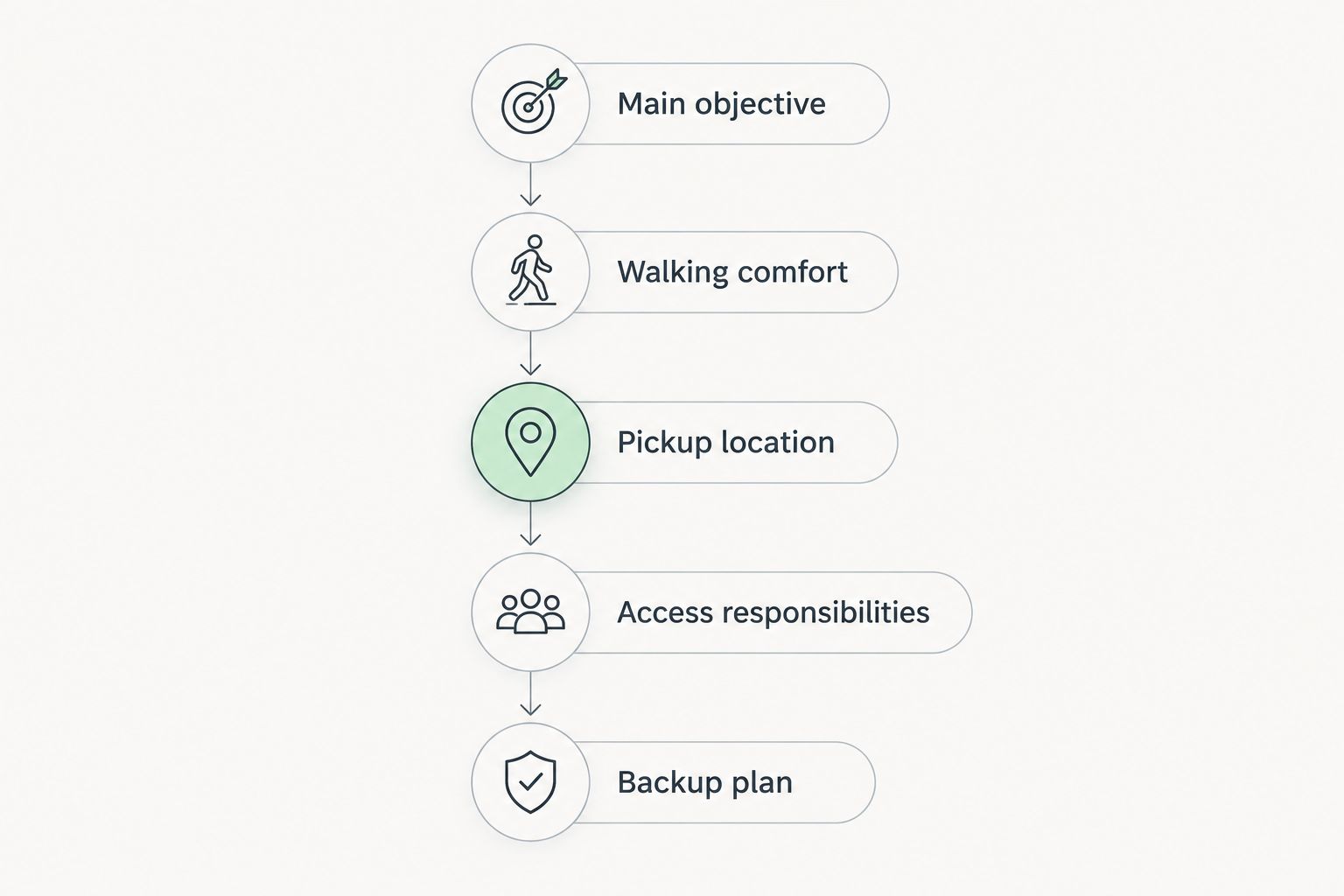
A useful inquiry gives the operator a decision to solve. Replace a request for the best tour with a short brief organized around these points:
- Main objective: Name the experience that matters most.
- Walking comfort: Describe the group's limitations and preferred effort.
- Pickup location: State where the outing must begin and end.
- Access responsibilities: Ask who handles entry arrangements and applicable fees.
- Backup plan: Request an alternative that preserves your main objective.
For Rocky Mountain National Park tours, give Eleavtion-tours the same brief you use with any other operator. Compare the actual proposed scope, not assumptions attached to the word luxury.
Check altitude and access before choosing a route
The National Park Service lists Trail Ridge Road's high point at 12,183 feet and Longs Peak's summit at 14,259 feet. These elevations are not interchangeable sightseeing objectives. A road excursion and a mountain ascent require different planning and should never be treated as substitutes.
Choose effort based on your group's comfort, not the highest elevation on an itinerary. Discuss relevant health concerns with a qualified healthcare professional before travel. A private vehicle does not remove altitude exposure.
Check National Park Service information for your exact 2026 travel date, including road conditions, closures, entrance requirements, and any applicable reservation system. Ask the operator to explain how those requirements affect the proposed outing. A tour description alone is not confirmation of access.
How these formats rank
Private sightseeing ranks first because it directly serves the broad first-visit goal: seeing the park without making a specialized activity mandatory. Hiking, photography, and wildlife formats rank by their distinct objectives, not by a claim that one operator outperforms another.
Transportation-only ranks separately because it changes who directs the experience. Judge every proposal against the same criteria: purpose, walking fit, access planning, guide responsibilities, pickup logistics, and weather flexibility.
Which private tour should you choose?
Choose private sightseeing if you are undecided. Move to a specialist format only when your group agrees that hiking, photography, or wildlife deserves priority over a broader introduction.
Choose transportation-only when you already have a workable independent plan. Before paying, get the itinerary, responsibilities, and alternative route in writing. That confirmation matters more than an itinerary's length.
FAQ
What's the best Rocky Mountain National Park tour for a first visit?
A private sightseeing tour is the best default for a first visit centered on scenery. Ask for a walking level your whole group accepts and an alternative route for closures or weather.
Is a private guided hike better than a sightseeing tour?
A private guided hike is better when trail time is your main objective. A sightseeing tour is the clearer choice when you want scenic stops without making a sustained hike central to the day.
Does private transportation include a park guide?
Private transportation does not automatically include guiding. Confirm whether the booking covers driving only, park interpretation, hiking leadership, or another explicitly stated service.
Can a private wildlife tour guarantee animal sightings?
A private wildlife tour cannot guarantee animal sightings. Choose it for patient observation and responsible interpretation rather than a promised encounter.
Does booking a private tour cover park entry requirements?
Do not assume a private tour covers park entry requirements. Confirm who handles any applicable reservation, entrance pass, and other access arrangements for your travel date.
How much does a private Rocky Mountain National Park tour cost?
Request a current quote for your specific itinerary. Ask the operator to identify the transportation, guiding, entry arrangements, and other inclusions so you can compare the same scope.
What should I ask before booking a private tour in 2026?
Ask for the route, walking expectations, pickup arrangements, guide responsibilities, and backup plan. Confirm current National Park Service access requirements separately from the operator's itinerary description.
One last thing
Ask what the tour becomes when its headline stop is unavailable. A useful answer names an alternative experience that still serves your objective—not merely a different place to park. Make that answer part of your booking decision.